

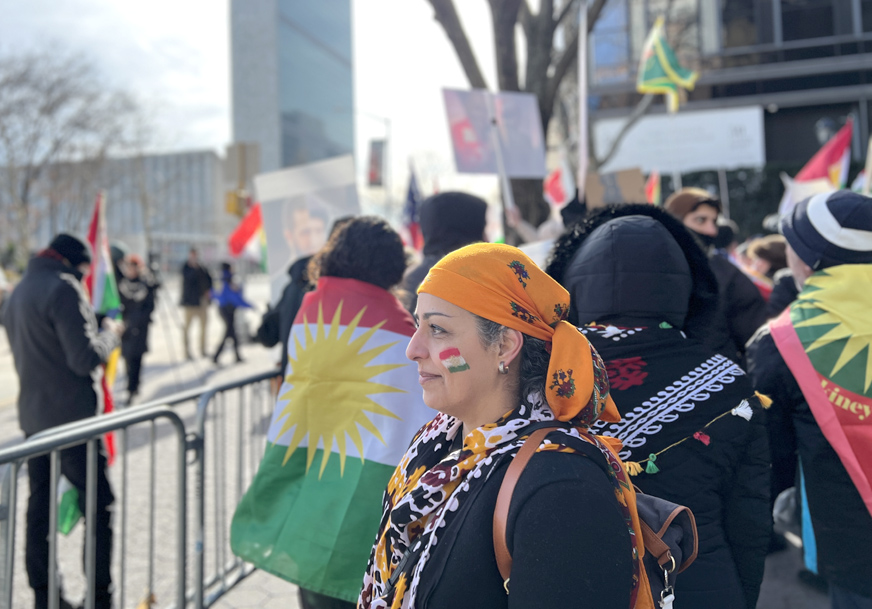
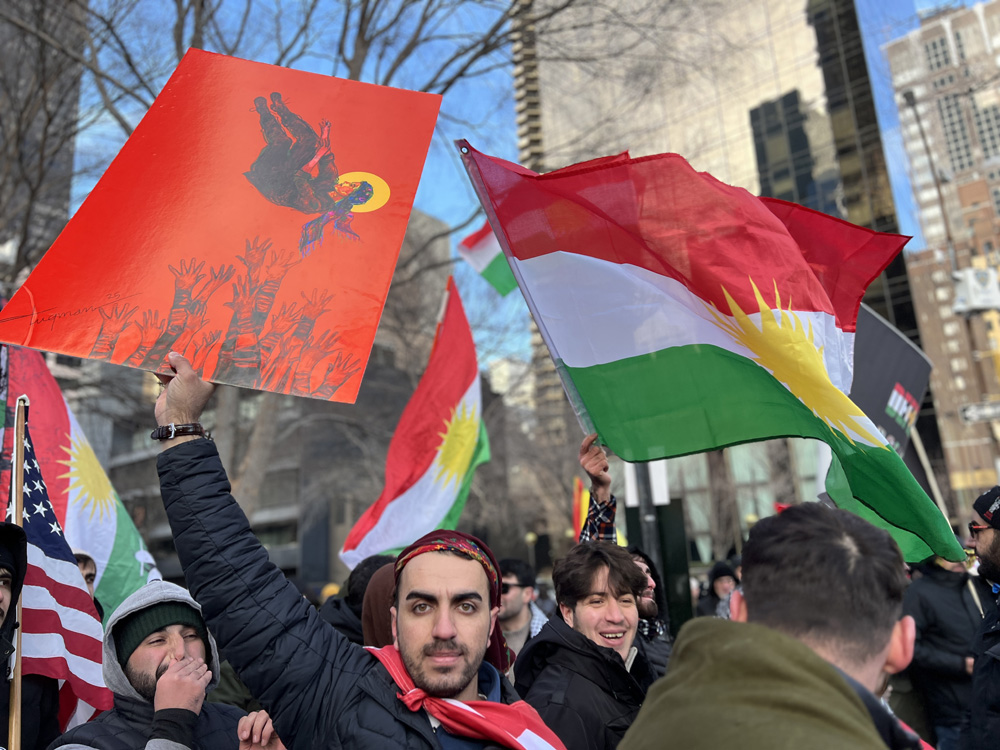
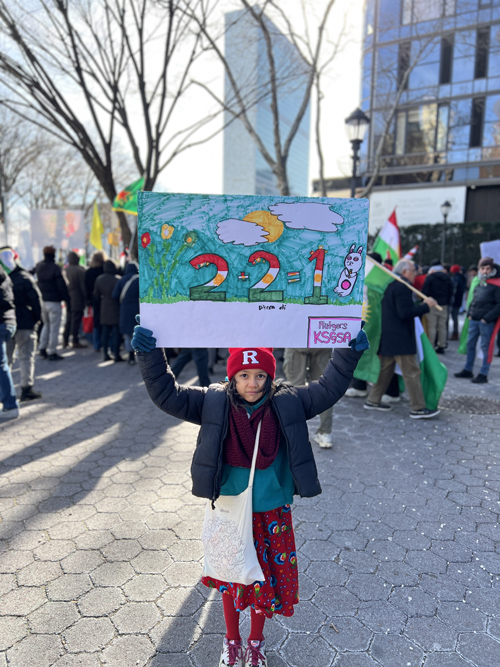
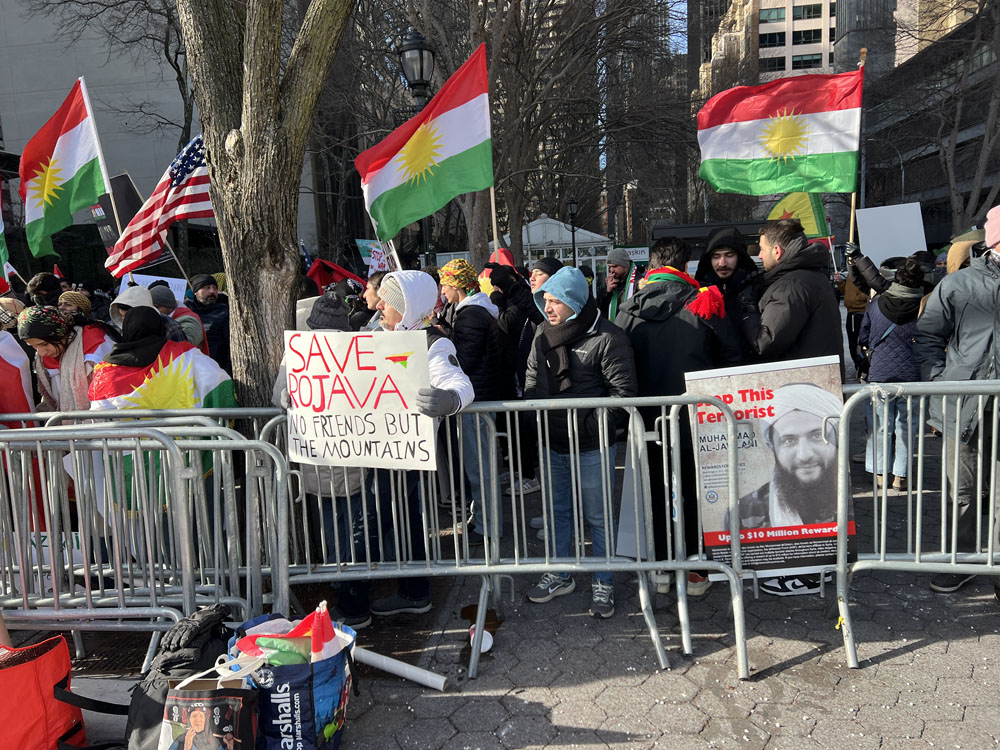
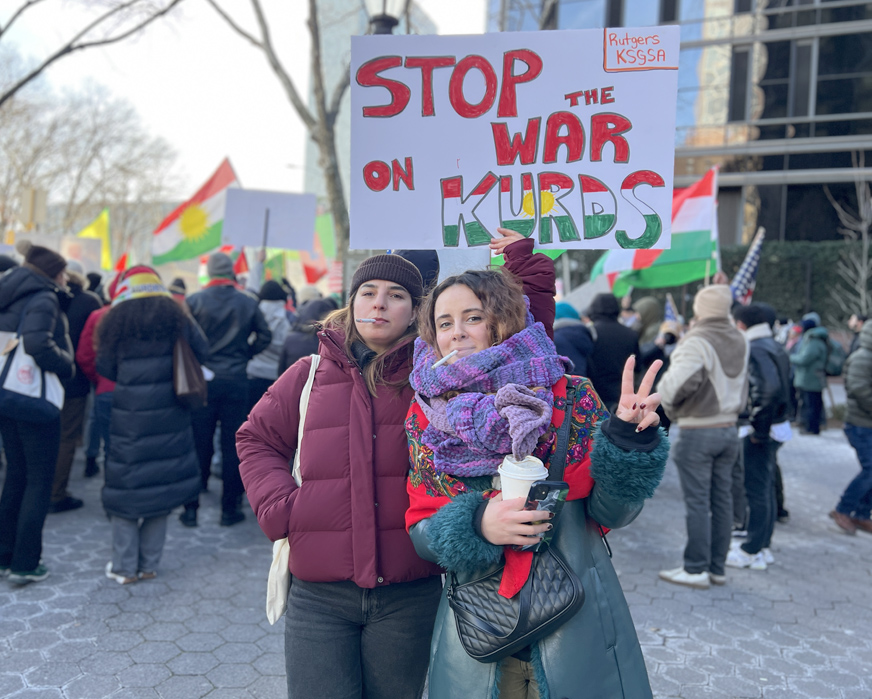
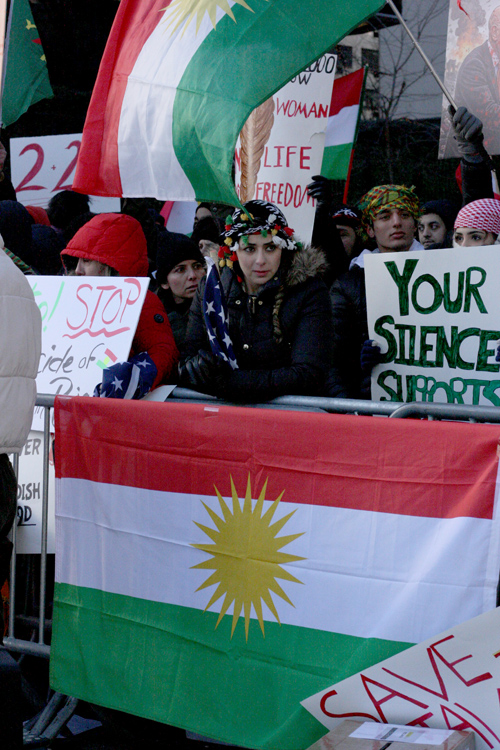
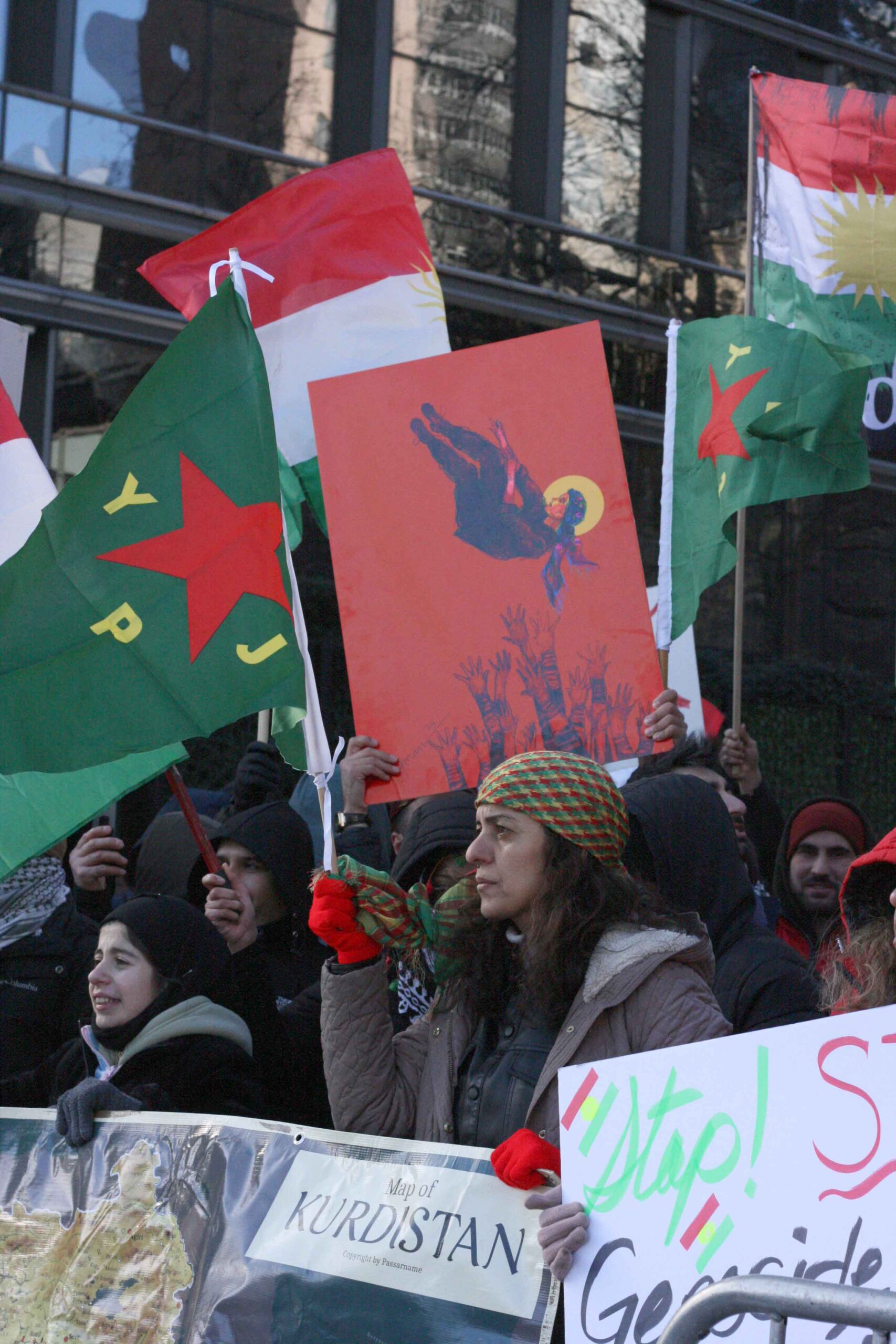
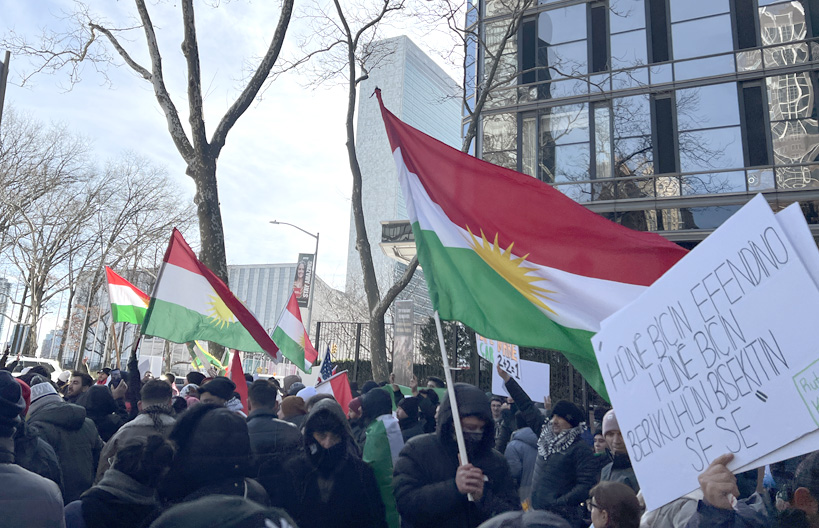
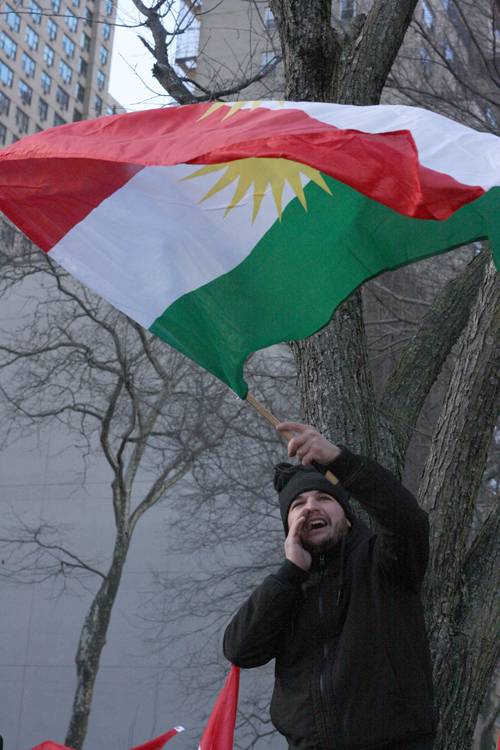
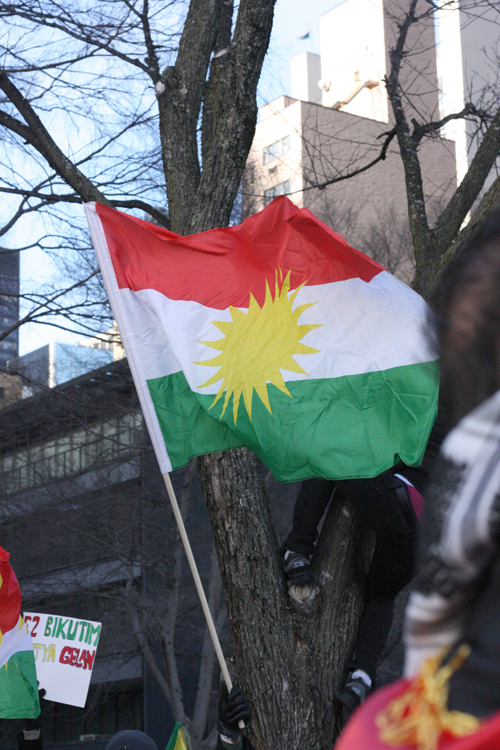
Emergency Protest Calling for Accountability, Dignity, and Justice
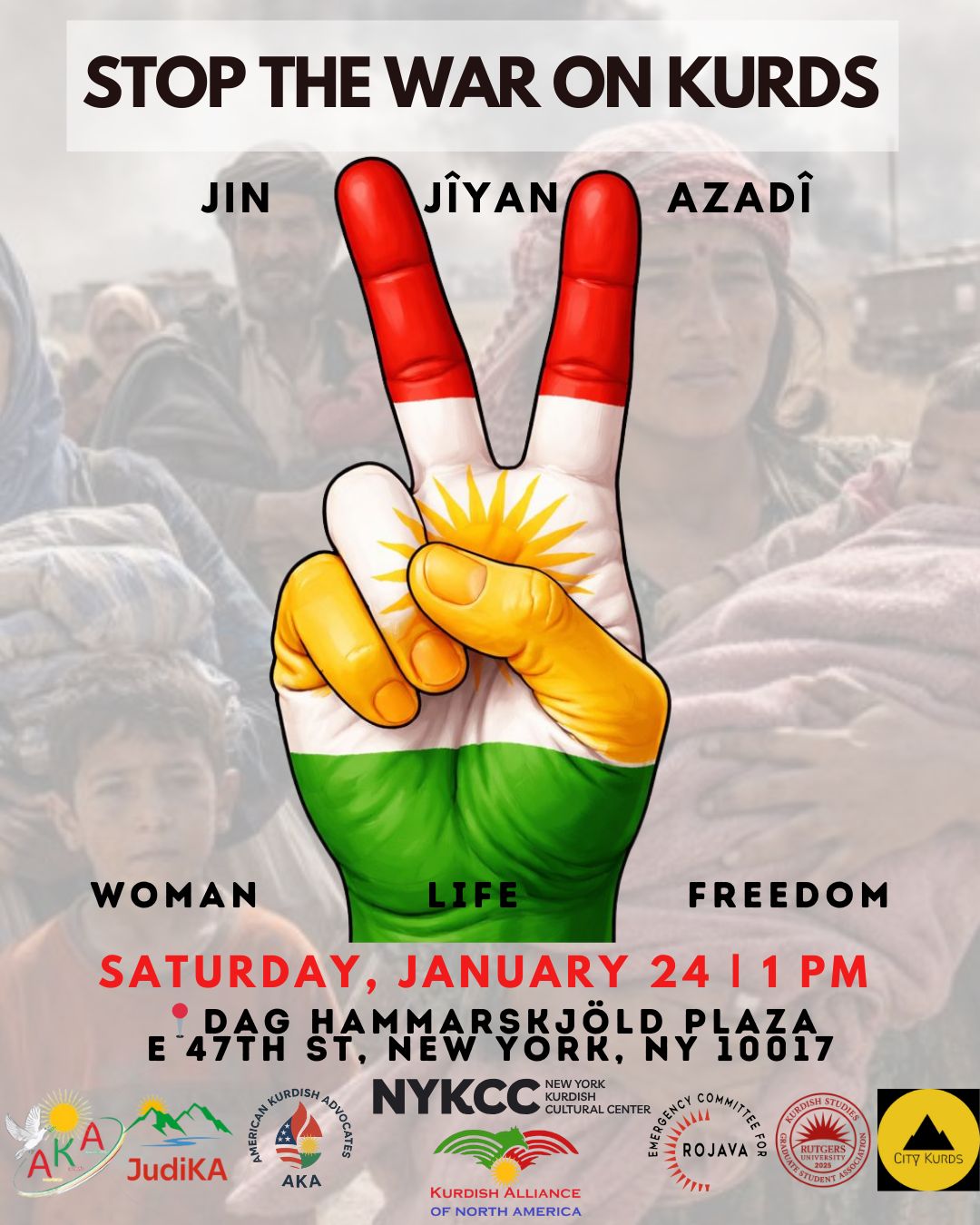
Dag Hammarskjöld Plaza, East 47th St, New York, NY 10017
January 24, 2026
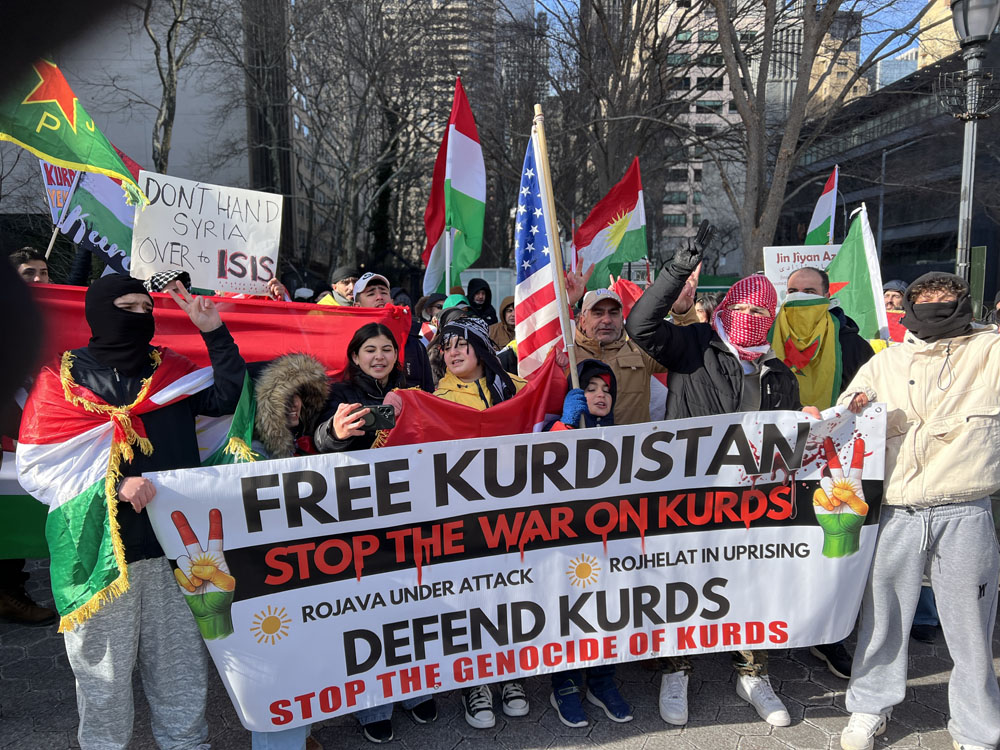
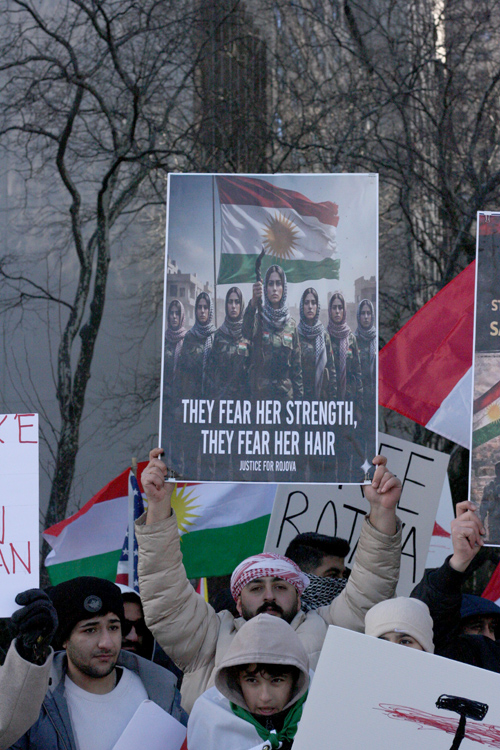
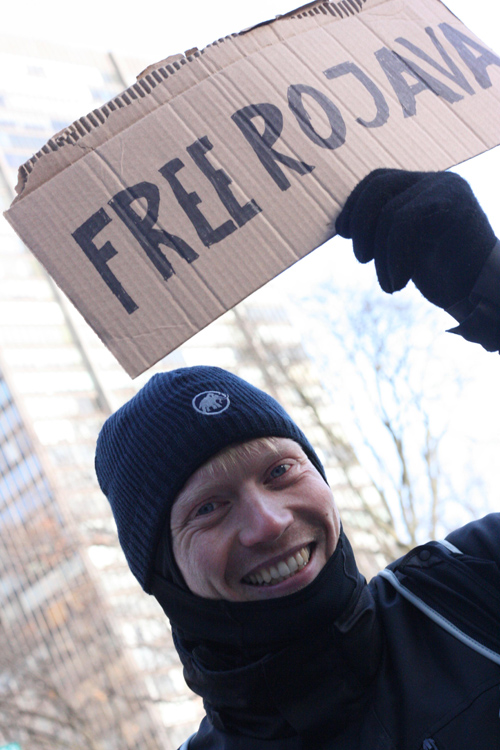
In Western Kurdistan (Rojava), an alarming humanitarian crisis is unfolding in real time. A region that once stood as one of the most compelling democratic experiments in the Middle East—grounded in pluralism, gender equality, and grassroots self-governance—is now facing renewed violence, displacement, and abandonment.
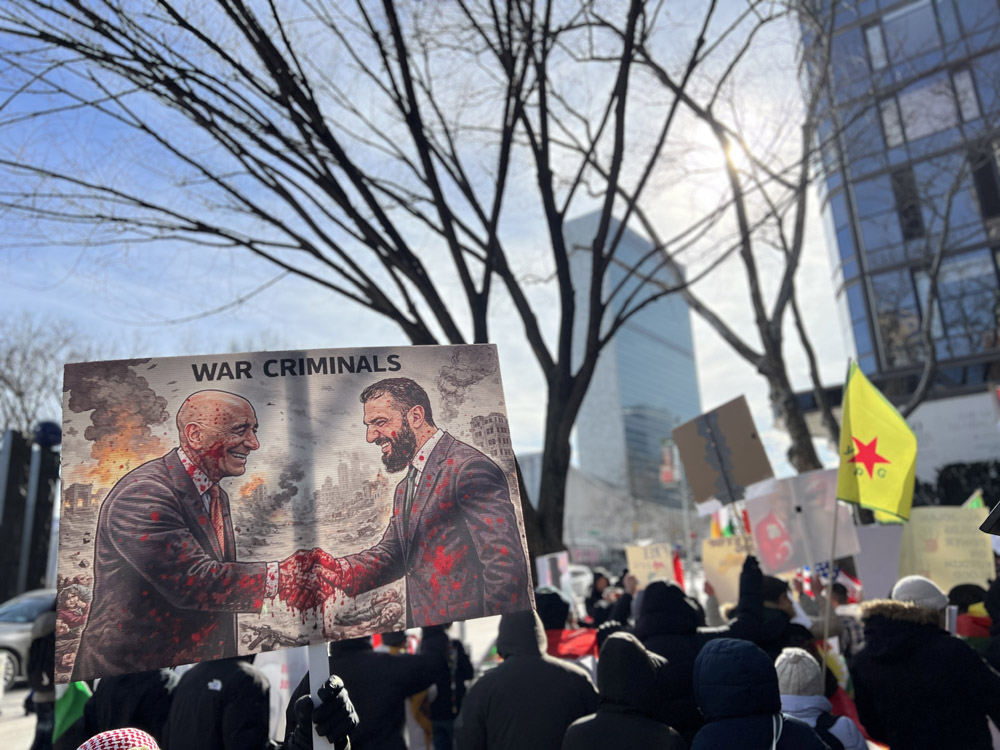
In early 2026, Syrian government–backed militias launched brutal attacks on Kurdish, Yezidi, and Druze neighborhoods in Aleppo under the pretext of “eliminating Kurdish forces”—the very forces that played a decisive role in defeating ISIS. Civilians were killed, families displaced in the dead of winter, and horrifying videos circulated showing torture, humiliation, and public violence against Kurdish civilians. The international response was once again a call for “restraint on both sides,” erasing the reality of asymmetrical violence and responsibility.
Rojava’s people paid an enormous price to defeat ISIS. Kurdish-led forces, alongside Arab, Yezidi, and other communities, lost more than 15,000 lives with U.S. support to stop one of the most brutal terrorist organizations of the 21st century. While the victory in Kobane is commemorated globally, the people who made it possible are now being left exposed to violence and political betrayal.
In Northern Kurdistan, under Turkish control, another historic moment is unfolding—and stalling. After four decades of armed conflict, the Kurdistan Workers’ Party (PKK) laid down its arms, opening the door to peace. This development generated expectations that the Turkish state would move toward recognition of Kurdish rights and end systematic assimilation policies. Instead, negotiations remain opaque, Kurdish political and cultural rights remain unresolved, and the international community has largely failed to ask why this moment has been stalled—and at whose expense.
In Eastern Kurdistan (Rojhelat), under Iranian rule, repression remains systematic and severe. Kurds, alongside Baluchis, continue to face executions, militarization, mass surveillance, and cultural repression. As global discussions about Iran’s future intensify, Kurds are once again left asking whether any political transition will include justice, rights, and recognition—or simply repackage exclusion under a different name.
Too often, the world notices Kurds only in moments of catastrophe. Even governments and institutions that speak fluently about human rights frequently fall silent when Kurds demand the most basic of them: dignity, safety, political recognition, and the right to exist without fear.
Kurds do not ask for blind sympathy or simplified narratives. We ask for consistency. We ask why Kurdish lives are treated as expendable bargaining chips, and why international law and human rights principles seem optional when Kurds are the ones demanding them.
This protest is a call to stop seeing Kurds only as useful fighters against terrorism—or as tragic victims when massacres occur. Kurds are a people with political agency, cultural depth, and a long history of contributing to global civilization.
We do not need to be dying to deserve attention.
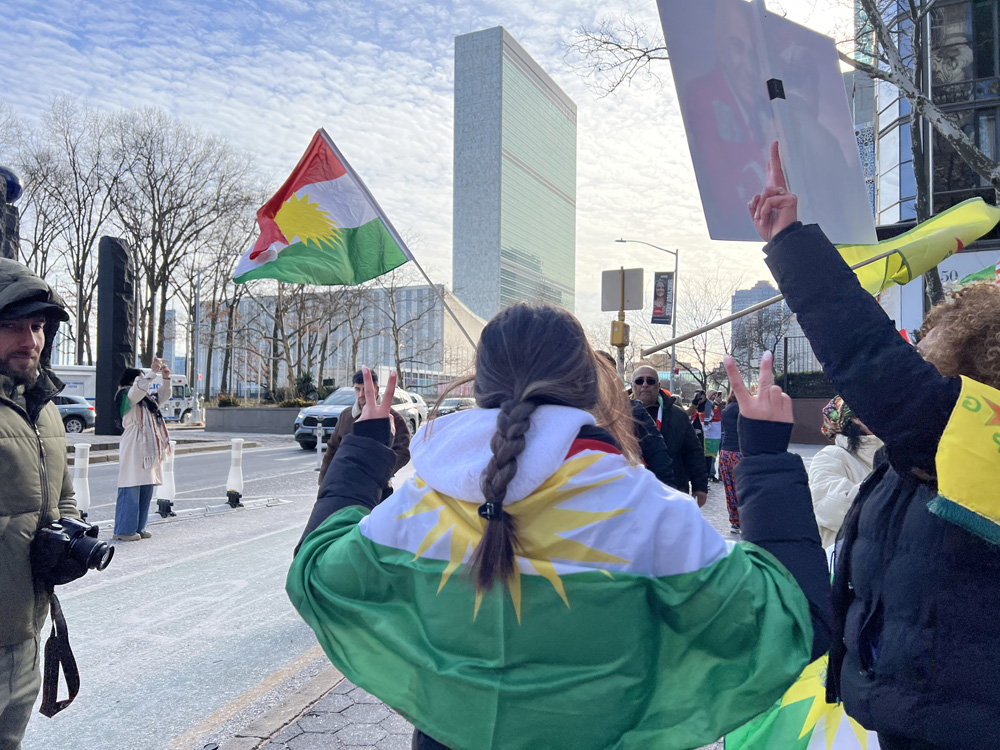
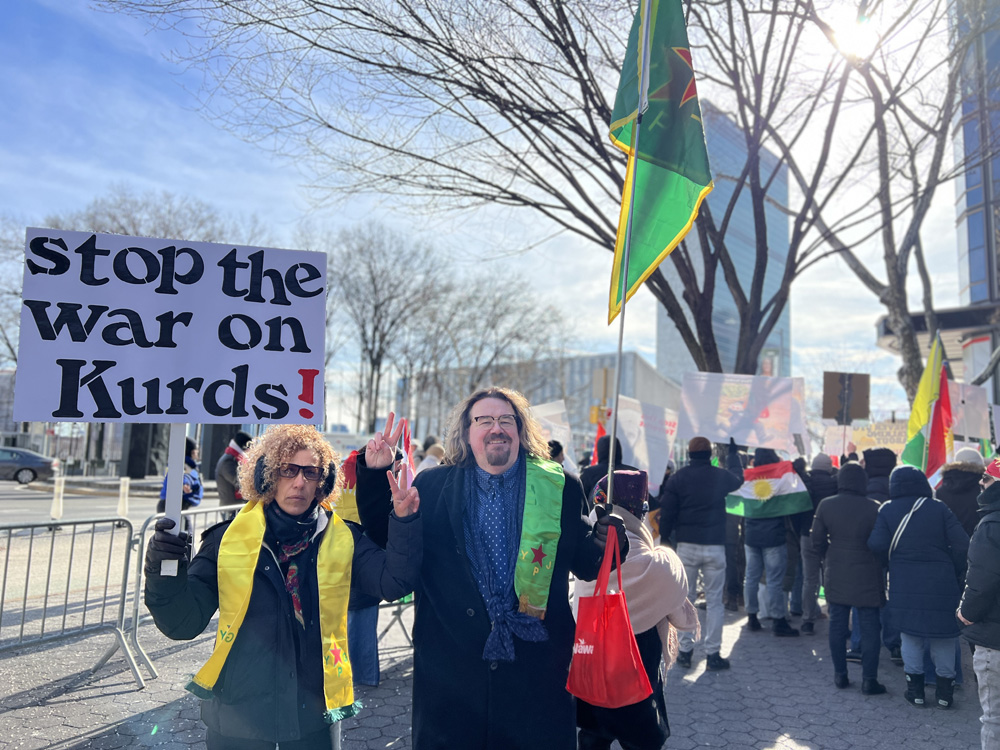
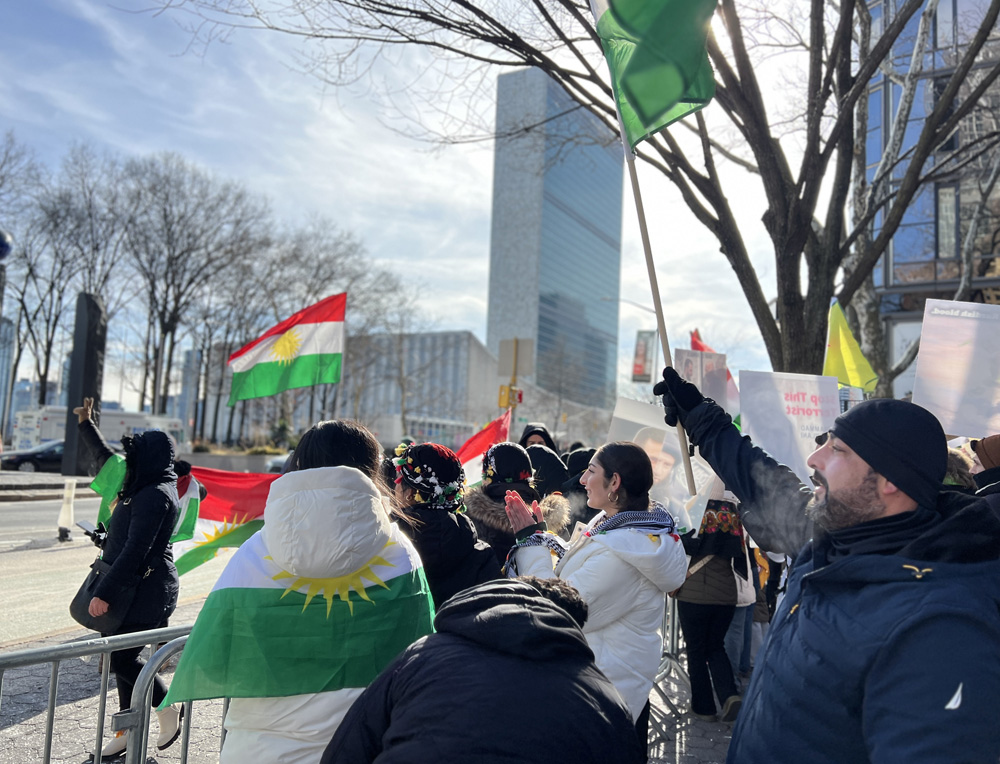
Protest Details: Location: 41st St & 1st Ave, across from the United Nations
 Date: January 24, 2026
 Time: 1–4 PM
Contact:
New York Kurdish Cultural Center
info@nykcc.org
Issued by:
Xeyal Qertel
Founder & President, New York Kurdish Cultural Center