

Kurdish Book Club, September 2, 2025
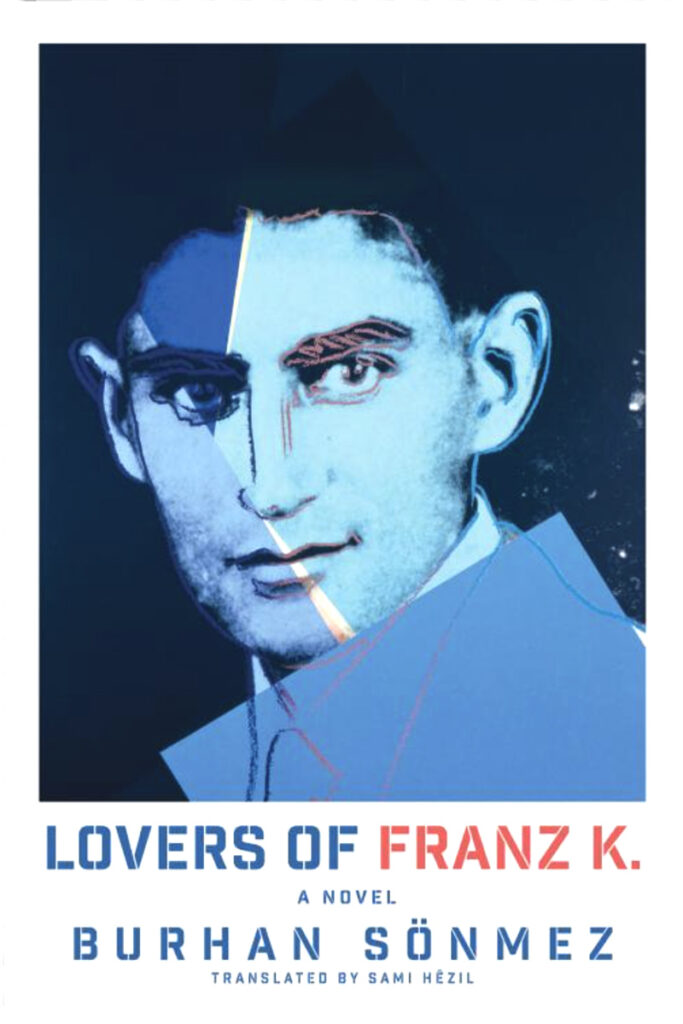
Burhan Sönmez, Lovers of Franz K.: A Novel. Translated by Sami Hêzil. Other Press, 2025. Available from the publisher here.
In 1960s West Berlin, Ferdy Kaplan has committed an act of violence, in which he killed a young man and collaterally injured the literary figure Max Brod, a friend of Franz Kafka, who was at the scene. As the novel opens, Ferdy is detained and is being interrogated. The narrative consists mainly of a dialogue between Ferdy and Police Commissioner Müller about his act of violence, for which Ferdy tries to lead Müller to the reason. Their discussion is very frank, and as the Müller (and the reader) gradually realizes the motive for the attack on Brod, Ferdy’s perception of the commissioner changes from contempt to respect.
The novel touches on themes of violence and justice and literature. Participants pointed out resemblances to Dostoyevsky’s Crime and Punishment, to Camus’s The Stranger, and even to Kafka’s The Trial.
The author is Kurdish; this is the first novel that he wrote originally in Kurdish. Yet it is not centered on the Kurdish experience and does not mention Kurds at all. It raises a question relevant to writing by any nondominant ethnicity. Are you going to write about the experience of your people, or are you going to write about separate things? In our discussion, participant were mostly glad for a novel not explicitly about the Kurdish experience. Not every Kurdish literary work, we felt, needs to be explicitly about Kurdish struggles.
Intertwined with the police interrogation is a discussion of the fact that Max Brod, a friend of Franz Kafka, published of Kafka’s manuscripts after Kafka’s death, even though Kafka had asked him to burn them. Was Brod correct to publish them, or should he have burned them? Was Brod just or unjust to his friend? At the end, Kafka seems symbolically to forgive Brod.